5 Monsoon Vegetables to Grow in Bangladesh
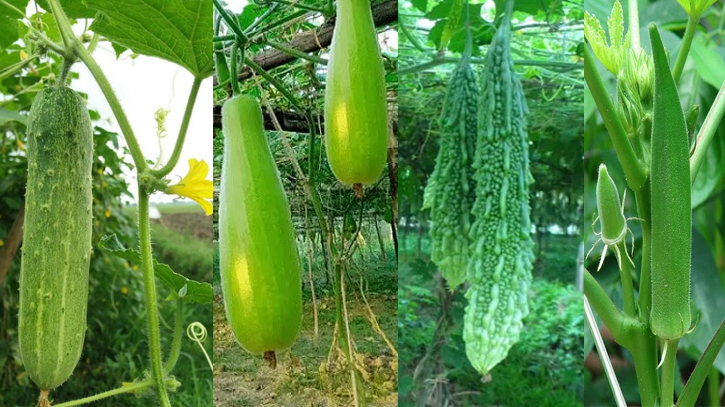
photo: collage
Growing vegetables on rooftops and in yards and urban areas of Bangladesh offers a solution, providing nutritious food and saving money. The monsoon season, with its abundant rainfall and favorable temperatures, is perfect for cultivating a variety of vegetables. Let's explore five vegetables that thrive in the monsoon season and can be easily grown in urban areas of Bangladesh.
1. Cucumber (Shosha)
Cucumbers are high in water content and contain vitamins K, C, and A, calcium, sodium, and iron. They help relieve dehydration and benefit skin health. Cucumbers are ready to harvest in 50-70 days after planting. Flourishing in the wet, warm monsoon weather, cucumbers need well-drained soil and plenty of sunlight. Trellising helps save space and keeps the fruit clean and healthy.
2. Okra (Bhindi)
Okra, known for its vitamins A, K1, and C, magnesium, fiber, antioxidants, and folate, takes about two months to grow and thrives in warm, humid conditions. Ideal for the monsoon season, okra can be grown in pots or directly in the soil, requiring moderate watering and well-drained soil.
3. Bottle Gourd (Lau)
Bottle gourd, with a growing period of 60-120 days, is ideal for the monsoon season due to its rapid growth and high-water content. It is rich in fibers, vitamins C and B, calcium, and magnesium. Bottle gourd requires a sturdy trellis for support and good drainage to prevent waterlogging. As a climbing plant, it utilizes vertical space efficiently, making it perfect for terrace gardens.
4. Eggplant (Begun)
Eggplants are nutrient-rich, providing fiber, vitamins, and minerals beneficial for overall health, including heart health. They usually take 80-90 days to grow from seed. Eggplants love warmth and can be grown in large pots or garden beds. They require regular watering and well-drained soil. The plant produces beautiful purple fruits used in various culinary dishes.
5. Bitter Gourd (Korola)
Despite its bitter taste, bitter gourd is celebrated as a superfood due to its numerous health benefits. It is low in calories but enriched with essential nutrients, including vitamins B1, B2, B3, C, magnesium, folic acid, zinc, phosphorus, manganese, iron, and high dietary fiber.
Bitter gourd thrives in the monsoon season, requiring a trellis for climbing and benefits from regular harvesting to promote more fruit production. It takes about 55-60 days from seed sowing to the first harvest.
newsbagladesh.com/nd