PM backs project to turn waste into fuel oil
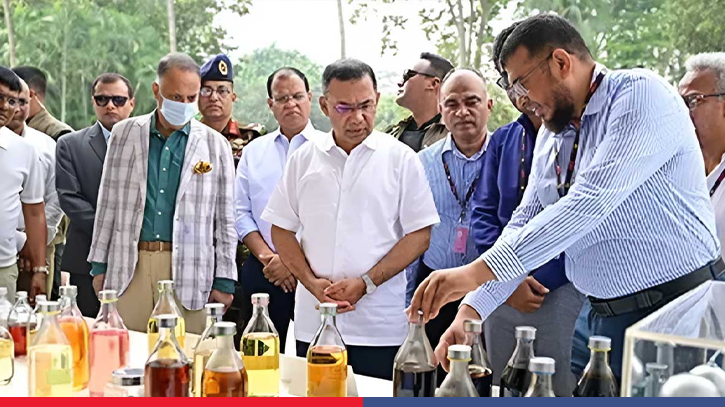
Photo: Collected
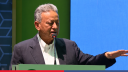
Prime Minister Tarique Rahman has pledged the government’s full backing for an innovative project to produce fuel oil from human waste, sewage sludge, kitchen waste and agricultural residues, as Bangladesh explores alternatives to imported crude and more sustainable ways of managing waste.
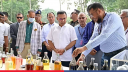
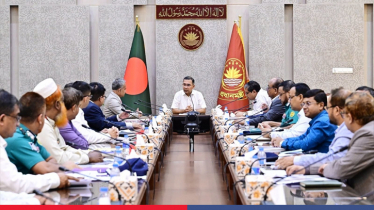
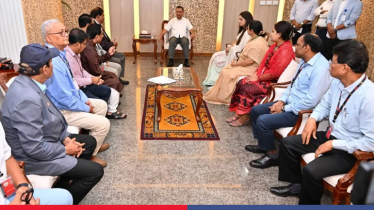
The prime minister gave the assurance on Saturday morning while inspecting a demonstration of the project at his office in Tejgaon, Dhaka. Professor Dr Md Khalequzzaman of Khulna University of Engineering and Technology (KUET) briefed him on the technology and the progress of the research. Having reviewed the project’s potential and implementation plans, Mr Rahman assured the researchers of the necessary government assistance. According to the researchers, nearly a decade of work using hydrothermal liquefaction (HTL) technology has yielded significant progress in producing bio-crude oil from waste. Laboratory tests recorded bio-crude yields of 50–55 per cent, and the team has had further success in producing diesel-rich bio-crude.
The next phase envisages a pilot plant capable of processing one to three tonnes of waste daily, so that the technology’s efficiency, production costs and commercial viability can be assessed. The proposed facility is estimated to require an investment of Tk 1 billion to Tk 1.2 billion. Moreover, the researchers believe that, if successfully scaled up, the technology could replace 10–15 per cent of Bangladesh’s imported crude oil, saving an estimated Tk 65 billion to Tk 130 billion in foreign exchange annually. Nevertheless, achieving that target would demand further assessment of the technology’s performance, economic feasibility and production costs on a larger scale.
Read More: Auto-rickshaw driver arrested over Cumilla schoolgirl’s murder
Project proponents contend that government backing could help the initiative bolster energy security, reduce dependence on imported fuel, curb environmental pollution and strengthen the domestic energy industry. Power and Energy Minister Iqbal Hasan Mahmood Tuku and State Minister Anindya Islam Amit attended the demonstration, as did University Grants Commission member Professor Abdullah Al Mamun, KUET Vice-Chancellor Professor Mohammad Masud and Bangladesh Petroleum Corporation Chairman Dr Mohammad Rafiqul Islam. Consequently, the project’s fate may now hinge on whether the pilot phase can demonstrate that its promising laboratory results are replicable at an industrial scale.
newsbangladesh.com/mb