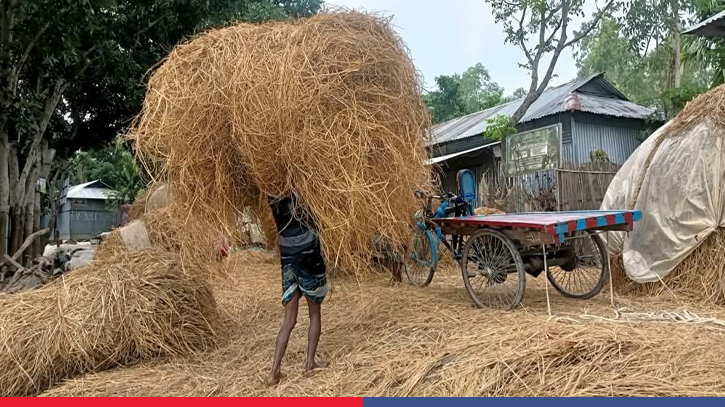
Cattle farmers struggle as straw prices reach Tk 25 per kg
File: Photo
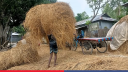
Cattle farmers across Bangladesh’s Rangpur region are grappling with soaring livestock feed costs as straw prices have nearly doubled over the past year, forcing some to sell their cattle ahead of the next Aman harvest, when supplies are expected to improve.
Straw prices have climbed to Tk 20–25 per kilogram from Tk 10–12 during the same period last year, while the price stood at Tk 15–18 just a month ago. The rising cost of oilcake, bran and other livestock feed, coupled with shrinking grazing land as farmers cultivate their fields throughout the year, has intensified the financial strain. Farmers say a single cow requires around 3–5kg of straw daily, making it an essential component of cattle feed, particularly for dairy cows. They expect supplies to increase after the Aman rice harvest in about a month, potentially easing prices.
Asad Mia, a farmer from Bhadrai Uttar Para in Lalmonirhat’s Aditmari upazila, said he had stocked nearly 10,000kg of straw in January to feed his seven cattle. However, after exhausting his reserves, he has been forced to buy straw at elevated prices, making cattle rearing increasingly expensive. Belal Hossain, a farmer from Char Kalmati in the Teesta River, said he sold three of his eight cattle last week because of soaring feed costs and shortages. Meanwhile, Aminur Rahman, a straw trader at Gaddimari market in Hatibandha, said traders typically buy straw from farmers at Tk 8–10 per kilogram during the harvest season before storing it for later sale. This year, however, lower stockpiles and stronger demand have pushed retail prices to Tk 20–25 per kilogram. He added that prices were unlikely to fall below Tk 15 per kilogram this year, even after the next harvest.
Read More: Early Aman harvest begins in northern Bangladesh
According to the Department of Agricultural Extension, the five districts in the Rangpur region produce an estimated 3.5–4 million tonnes of straw annually. The Department of Livestock Services estimates that the region has around 4.2 million cattle, including 1.5–1.6 million across approximately 800 riverine chars. Dr Abu Bakar Saiful Islam, additional director of the Rangpur regional agricultural extension office, said farmers increasingly valued straw and stored it during the harvest season, leaving those without sufficient farmland dependent on purchased feed throughout the year. Divisional livestock officer Dr Abdul Hai Sarkar said cattle rearing had expanded, with many farmers remaining profitable despite buying feed. However, he acknowledged that the recent surge in straw prices had caused concern, adding that prices were expected to ease after the Aman harvest.
newsbangladesh.com/mb