Trapped between flood and erosion: Life along the Teesta
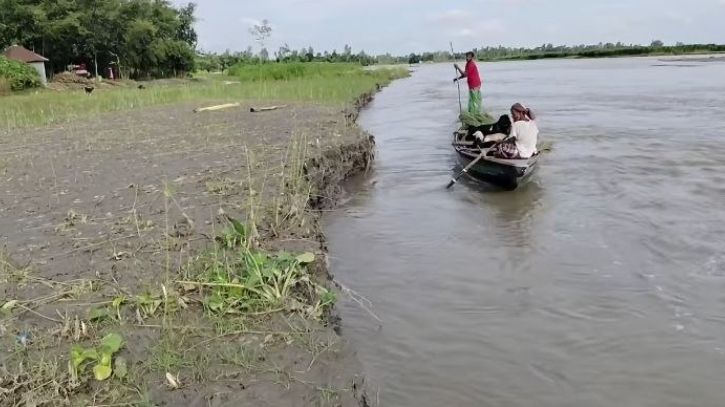
Photo: NewsBangladesh
For hundreds of thousands of families along the Teesta River in Bangladesh's Rangpur region, there is no reprieve: when the water rises, flooding devours their homes; when it recedes, the riverbank itself collapses beneath them, locking communities across five districts in a relentless cycle of loss.
In Lalmonirhat's Harinchara village, farmer Abdul Baki described how floodwaters surged into homes overnight on Wednesday, forcing families to flee with their livestock to higher ground and submerging freshly planted Aman rice seedlings that farmers fear will be destroyed entirely if the water does not recede within days. Similar scenes unfolded in Rangpur's Char Nehali village, where farmer Akbar Ali said knee-deep water forced his family from their home Wednesday night, part of a month-and-a-half-long pattern of rising and falling water that has already swallowed roughly 100 homesteads into the river in his village alone; in Kaligonj's Shailmari char, farmer Hazrat Ali reported floodwater submerging every home and road in his area, describing a life in which rising water floods homes and falling water triggers erosion, leaving residents with dwindling land and no lasting relief.
Read More: PM issues one-month ultimatum to prevent River pollution
Water Development Board data show the Teesta's level at the Dalia point in Lalmonirhat had fallen to 52.10 metres by Thursday morning--5 centimetres below the danger mark of 52.15 metres--continuing a declining trend after the river had flowed 13 centimetres above danger level on Wednesday, with similar sub-danger readings recorded at Rangpur's Kaunia and Gaibandha's Tarapur points. Executive engineer Sunil Kumar of the Lalmonirhat Water Development Board said the river typically produces flash floods that recede within 24 hours absent fresh upstream runoff, but noted that this pattern of rapid rise and fall has persisted for a month and a half, leaving riverbank communities to face renewed erosion and crop losses year after year with no permanent solution in sight.
newsbangladesh.com/mb