Power sector debt of Tk 56,000 crore to be resolved legally
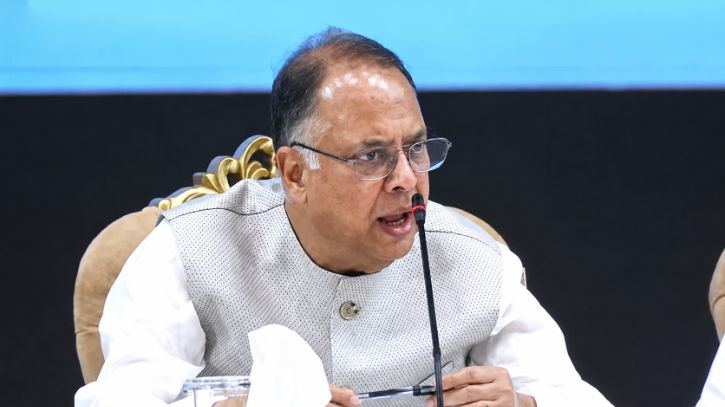
Energy Minister Iqbal Hasan Mahmud Tuku speaks at the press/ Photo: Collected
The government is considering a legal framework to resolve long-standing liabilities of around Tk 56,000 crore in the power and energy sector, as officials warn that legacy issues, costly power purchases and capacity payments continue to strain the country’s energy finances, Energy Minister Iqbal Hasan Mahmud Tuku said on Friday.
Speaking at a post-budget press conference at the Osmani Memorial Auditorium in Dhaka on Friday, Power, Energy and Mineral Resources Minister Iqbal Hasan Mahmud Tuku said Bangladesh has successfully maintained an uninterrupted energy supply despite global geopolitical uncertainties, including disruptions surrounding the Strait of Hormuz.
However, he noted that the current administration inherited significant structural and financial challenges in the power sector, including an estimated Tk 56,000 crore in outstanding liabilities. According to the minister, the financial burden largely stems from costly electricity purchases from Independent Power Producers (IPPs), combined with subsidised consumer tariffs that have widened the sector's fiscal deficit.
Addressing the controversial capacity charge mechanism, Tuku said the government is reviewing the issue cautiously. He warned that abruptly terminating such payments could jeopardise power companies' ability to repay bank loans and maintain operations, potentially triggering fresh electricity shortages.
"The previous government's policies created complex obligations that require a legal and sustainable solution," the minister said, adding that the Law Ministry has been consulted to determine an appropriate legal framework for resolving the outstanding liabilities while safeguarding state interests.
To strengthen long-term energy security, the government is enhancing the capabilities of the Bangladesh Petroleum Exploration and Production Company Limited (BAPEX) and accelerating offshore and onshore gas exploration initiatives. International energy firms have been invited to participate in upcoming exploration tenders, with discussions expected to begin after the bidding process concludes.
The minister also reaffirmed the government's commitment to expanding renewable energy, announcing a target of generating 5,000 megawatts of solar power by 2030, with the possibility of increasing the goal in line with future demand and international sustainability requirements.
Highlighting inefficiencies in past projects, Tuku cited examples of unused digital electricity meters and delays in substation construction, describing them as instances of poor planning and mismanagement of public resources.
Read More: Gold prices drop again as silver also gets cheaper
He acknowledged that restoring financial stability and improving governance in the energy sector would take time, urging the public to remain patient as the government implements reforms aimed at addressing longstanding structural challenges.