Bangladesh will surely turn around: PM
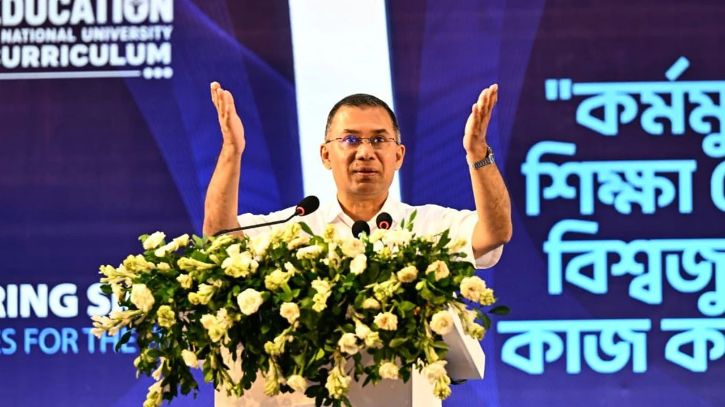
Photo: Collected
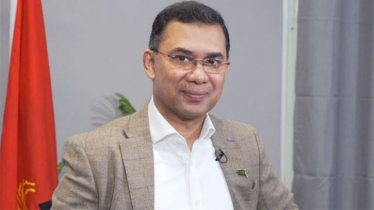
Prime Minister and BNP Chairman Tarique Rahman has expressed his firm determination to turn the nation around into a new democratic Bangladesh, overcoming the impact of more than a decade and a half of fascist rule and exploitation.
He explicitly stated that the previous autocratic regime did not just strip the citizens of their democratic and political rights; it also virtually reduced the country's overall education system—much like other vital state institutions—to ruins. He emphasized that reviving the education system from those ruins to build a modern, technology-driven, and career-oriented society is the most pressing demand of our time. He urged the younger generation not to chase after degree- or certificate-only education, but rather to equip themselves with practical skills to tackle global challenges.
The Prime Minister made these remarks as the chief guest during his speech at the grand inauguration ceremony of the "Teachers' Training Program on Career-Oriented and Technical Education," organized by the National University at the traditional Bangladesh-China Friendship Conference Center in the capital on Sunday (June 7) at 11:25 AM.
Systemic Reconstruction and Reform
Highlighting the current political and institutional reforms at the beginning of the event, the Prime Minister said, "Over a long period, our country's democratic system and various state organs have been systematically damaged. Due to fascist rule and extreme exploitation, our education system was plunged into a deep crisis. However, leaving that past darkness behind, it is now our time to move forward. In this new democratic Bangladesh, we will surely turn things around in every sector, including education, InshaAllah."
At the same time, he paid deep respect to those who sacrificed their lives and made immense contributions on the streets during the country's independence, the Liberation War, and the long struggle for democracy. He noted that the only way to honor the true contributions of the brave individuals who sacrificed themselves at every historic juncture to protect the freedom of the country and its people is to deliver a discrimination-free, knowledge-based society and state. He expressed concern that Bangladesh could fall behind in future global competition if it fails to properly adapt to technology and education.
Read More: Ramisa Murder Case: Sohel and Swapna Sentenced to death
Navigating the Fourth Industrial Revolution
Referring to the rapidly changing global economic and technological landscape, the Prime Minister stated that the world has entered the era of the Fourth Industrial Revolution. The unrestrained expansion of Artificial Intelligence (AI) and modern automation has presented humans with diverse challenges, while simultaneously opening up new horizons of potential. Although AI-driven technologies might shrink or eliminate some traditional professions, they are concurrently generating a massive volume of new fields of work.
He shared that the current interim government has already initiated work to make the curriculum from the primary level up to higher education completely practical, multifaceted, and technology-dependent to successfully navigate this technological revolution. The Prime Minister made it clear that amending and reforming the educational curriculum is not a stagnant issue but a continuous process. Against this backdrop, the effective steps taken by the National University authorities to align their curriculum with the labor market serve as a successful example.
Key Focus Areas for Future Skills
Prime Minister Tarique Rahman outlined a specific framework of the subjects being prioritized to prepare students for the modern labor market. He noted that in the current era, a complete educational curriculum cannot be envisioned with traditional syllabi alone. To build the future of students, certain essential "soft skills" and modern technological knowledge must be integrated.
He directed that priority be given to the following specialized fields:
Technology & Security: Artificial Intelligence, Cyber Security & Forensic Science, and Advanced Computer Programming.
Business & Communication Skills: Digital Entrepreneurship, Digital Communication, Financial Literacy, Presentation Skills, Leadership, and Cognitive Empowerment.
Frontline Technologies of the Future: Genetic Engineering, Biotechnology, Quantum Computing, Industrial Internet of Things (IIoT), Materials Science, Nanotechnology, 3D Printing, and Next-Generation Technology.
The Prime Minister warned that if the youth remain indifferent to these subjects or if the state fails to teach them, achieving success in the future workplace will become impossible.
Modernizing National University
Recalling the vast role of the National University in expanding higher education in the country, Tarique Rahman mentioned that there are more than 2,000 colleges affiliated with this university across the country, where nearly 4 million students are currently studying. Over 10 million students have already gradually received higher education through this system.
He remembered the visionary decision of the university's founder, the late former Prime Minister Begum Khaleda Zia, stating that she established the National University in 1992 so that children from ordinary families in both urban and rural areas could easily attain higher education in their local areas, and to eliminate management crises in education. Initiatives have now been taken to modernize the university further to turn this massive student body into national assets.
Addressing Educated Unemployment
Identifying the root cause of why hundreds of thousands of graduates remain unemployed every year despite leaving universities, the Prime Minister noted that despite achieving the highest academic certificates or degrees, the unemployment rate among educated youth is rising due to a lack of practical, applied, or technological skills. Calling this highly unfortunate, he stated that the current government intends to bring the Industry-Academia Linkage under an accountable framework to mitigate this crisis.
The head of government shared that specific and practical measures have been undertaken so that youth do not have to carry the curse of unemployment right after completing their academic life:
Skill Development During Studies: direct institutional links are being established between universities located in divisional cities and local industries/businesses. As a result, alongside their academic studies, students can gain real, hands-on work experience through apprenticeships and internships.
Creating Entrepreneurs on Campus: To shift the mindset of youth from just chasing jobs to becoming job creators or entrepreneurs, the government has taken special initiatives at the college and university levels. A decision has been made to provide "Seed Funding" or "Innovation Grants" through competitive processes on campuses for those with new and innovative business ideas. This will allow students to become entrepreneurs and create employment for many others rather than waiting for jobs after finishing their studies.
Closing his speech, the Prime Minister placed special emphasis on raising humane individuals alongside technological excellence. Addressing the teachers, he said that education is not merely a tool for an individual's economic growth or the state's GDP growth; it is the primary determinant for creating world-class competitive capabilities. However, there is no alternative to moral education alongside this technological modernization.
He called upon the National University authorities and the country's educators, saying, "We must not turn the future generation of Bangladesh into efficient robots. Alongside technological dependence, the education system must be more caring and attentive toward developing students' morality, mental health, values, social inclusion, and environmental conservation. Only then will the nation get a truly good human being alongside a skilled citizen, and the country will move forward towards true self-reliance."
newsbagladesh.com/nd