Bangladesh celebrates Pohela Boishakh with vibrant festivities
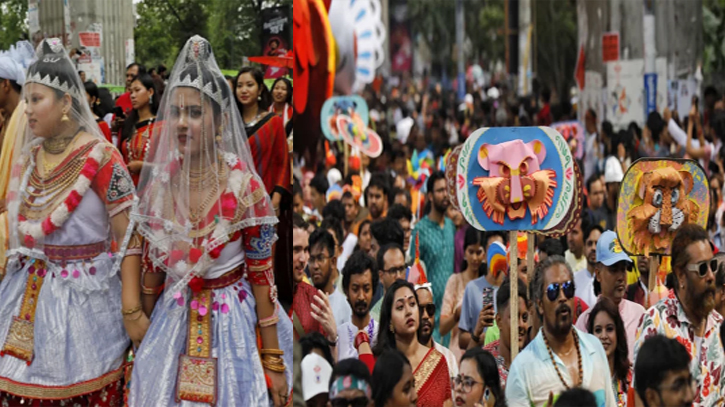
Photo: Collected
Thousands of people crowded public spaces to celebrate Pohela Boishakh, the first day of the Bengali New Year 1433, braving intense heat to join the festivities across the country on Tuesday.
Shedding the sorrows and burdens of the outgoing year, people embrace the spirit of renewal, unity, and hope that defines the festival.
President Mohammed Shahabuddin and Prime Minister Tarique Rahman greeted the nation with messages of unity and hope.
The President described Pohela Boishakh as a “universal festival of the Bengali soul,” calling for harmony and renewed commitment, while the Prime Minister highlighted its deep connection with the country’s history, culture and agrarian roots.
Deeply rooted in centuries-old traditions, Pohela Boishakh has evolved into a universal celebration that transcends religion, caste and ethnicity, bringing people together both at home and abroad.
The day stands as a powerful expression of cultural identity, patriotism and non-communal harmony, carrying the collective aspiration for a future marked by light, truth and beauty.
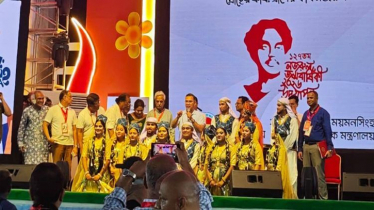
In Dhaka, celebrations began at dawn at Ramna Batamul, where Chhayanaut hosted its iconic programme with the national anthem and the timeless song “Eso He Boishakh,” continuing a long-standing tradition of welcoming the New Year through music and unity.
As in previous years, the Faculty of Fine Arts at Dhaka University organized the traditional Boishakhi Shobhajatra, themed “Harmony of the New Year, Revival of Democracy.”
The colourful procession featured symbolic motifs including a rooster, dotara, pigeon, elephant and horse, representing strength, creativity, peace, dignity and movement.
Hundreds of students participated, carrying the national flag, colorful local instruments, while musicians performed patriotic songs.
Across the country, cultural bodies and institutions have organized elaborate programmes.
The Bangladesh Shilpakala Academy, Bangla Academy and the Ministry of Cultural Affairs are hosting a range of events nationwide.
At Topkhana Road, Udichi holds a day-long programme of music, poetry, and dance, while the Dhaka South City Corporation (DSCC) has arranged cultural events under the theme of reviving Bengal’s lost joys.
Meanwhile, puppet shows organized by Art Pix are being staged at the Bangladesh Military Museum premises in Bijoy Sarani, adding to the festive appeal.
From early morning, large crowds gathered in Shahbagh, Ramna Park, TSC, and the Faculty of Fine Arts area of Dhaka University, with visitor numbers steadily increasing as the day progressed.
Young men and women dressed in traditional red-and-white attire moved in groups, taking photographs and exchanging greetings.
Many visitors also had “Shubho Noboborsho” painted on their cheeks near the Fine Arts Institute, adding color to the festive atmosphere.
newsbagladesh.com/nd