The unseen costs of Climate Disasters

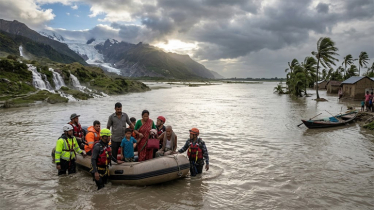
symbolic image
Climate change is usually pictured through the images that dominate our screens: forests consumed by wildfire, towns swallowed by floodwater, record-breaking heat waves, and droughts turning fertile land to dust.
But that visible destruction is only part of the story. Like an iceberg, much of the climate crisis lies below the surface. It doesn't just damage buildings and ecosystems - it disrupts food systems, threatens public health, drains economies, deepens inequality, drives people from their homes, and stalls development. The real challenge isn't just responding when disaster strikes; it's understanding and addressing everything that follows.
The Visible Face of Climate Change
Floods, storms, droughts, heat waves, and wildfires are getting more frequent and more severe, and they draw attention because the damage is immediate and visible: lives lost, homes destroyed, economies shaken. Governments send emergency crews, aid groups deliver relief, and communities rebuild.
These responses matter, but they mostly treat symptoms. A house can be rebuilt in months. Lost income, disrupted schooling, and mounting debt can linger for years.
The Hidden Chain Reaction
Every climate disaster sets off a chain reaction that outlasts the headlines. When drought wipes out crops, agricultural losses turn quickly into food shortages and higher prices. Farmers lose income, families cut back on essentials, and entire communities can become dependent on humanitarian aid. Water scarcity compounds the problem. As rivers and wells run dry, clean water becomes harder to reach, straining farming, sanitation, education, and health all at once. Women and children often bear the heaviest burden, walking longer distances just to fetch water - a daily toll that can permanently reshape a household's stability.
Food Security Under Pressure
Food security may be the climate crisis's biggest hidden cost. Shifting rainfall, rising temperatures, soil degradation, floods, and droughts are making planting and harvest seasons unpredictable, and farmers in developing countries often have the least cushion to absorb the shock. When production drops, prices climb. Poor families end up eating less and eating worse, raising the risk of malnutrition, especially among children and pregnant women. Hunger then stops being just a humanitarian issue - it keeps kids out of school, worsens health, and slows economic growth. Climate- resilient agriculture, smarter water management, and stronger support for small farmers aren't optional extras; they're essential.
Read More: PM directs Military promotions beyond political ideology
A Growing Public Health Emergency
Climate change is also a public health crisis in the making. Rising heat drives up illness and death, especially among older adults, children, and outdoor workers. Flooding contaminates drinking water and fuels waterborne diseases like cholera. And as weather patterns shift, disease-carrying mosquitoes are spreading into new territory, raising the risk of malaria and dengue.
Extreme weather can also overwhelm already-fragile health systems - hospitals lose power, supply chains break down, and demand spikes all at once. Building climate resilience has to include hospitals and clinics that can withstand the strain.
Economic Losses and Deepening Inequality
Climate disasters don't just destroy property; they erode economic security. Governments pour scarce funds into emergency response and rebuilding. Businesses lose productivity. Families absorb financial hits they can't always recover from. For poorer households, recovery is slower and harder. Savings run out, productive assets get sold off, children are pulled from school, and debt piles up - a deep injustice, since the communities contributing least to global emissions often suffer the most. Wealthier communities bounce back with
more resources; poorer ones face repeated shocks with fewer tools to cope. Climate policy has to grapple with fairness, not just adaptation.
Displacement, Migration, and Social Stability
As conditions worsen, more people are being pushed from their homes. Floods, coastal erosion, rising seas, and prolonged drought are making entire regions harder to live in, and climate-driven displacement is already a major humanitarian concern. Climate- and weather-related disasters triggered nearly 32 million new internal displacements in 2022 alone. By 2050, estimates for climate-linked migration range anywhere from 25 million to well over a billion people, depending on emissions and how well the world adapts.
South Asia faces particular risk
World Bank projections suggest tens of millions could become internal climate migrants across the region by 2050, including close to 20 million in Bangladesh. Globally, the Internal Displacement Monitoring Centre estimates 218 million weather-related internal displacements between 2014 and 2023.
Displacement strains housing, jobs, schools, health care, and public services, and competition over land and water can heighten tensions. Left unaddressed, it becomes a threat to peace and stability, not just a humanitarian one.
Climate Change is a Development Challenge
These hidden costs touch every sector of development. Schools close, children fall behind, and infrastructure wears down under repeated extreme weather. Growth slows as investment gets diverted, again and again, from long-term progress to short-term recovery. Climate resilience needs to be built into national planning - infrastructure, education, health care, agriculture, and economic policy alike.
Investing Before Disaster Strikes
The smartest response isn't to wait for disaster and rebuild afterward - it's to invest before the crisis hits. Resilient infrastructure limits damage. Climate-smart agriculture keeps food production steady.
Sustainable water management, ecosystem restoration, and clean energy build resilience while cutting emissions at the same time. Early warning systems give people time to evacuate and protect what matters most. Disaster preparedness should be treated as an investment, not an afterthought - and it should prioritize those most exposed and least equipped to recover- poor households, small farmers, women, children, older adults, and high-risk communities.
Looking Beneath the Surface
The greatest dangers of climate change are often the ones nobody sees until they've reshaped people's lives. Floods, wildfires, droughts, and heat waves are the visible face of the crisis - but beneath them sit food insecurity, illness, economic hardship, displacement, inequality, and stalled development.
Treating the climate crisis as an interconnected system changes how we respond. Policymakers, researchers, businesses, aid organizations, and everyday citizens need to look past the immediate destruction and ask what comes next. Relief matters, but real resilience takes prevention, adaptation, and long-term investment. Climate change isn't just an environmental problem - it's a multidimensional crisis touching human well-being, economic security, social justice, and sustainable development. The world can't afford to fixate on headline disasters while ignoring the quieter damage building underneath. Much of the true cost accumulates silently- in lost livelihoods, rising food prices, health risks, debt, displacement, and missed opportunities.
Confronting the climate crisis means looking past the disasters we can see and reckoning with the hidden costs beneath them. Only by addressing both can we build communities that are safer, healthier, more equitable, and more sustainable for generations to come.
Nicholas Biswas is a freelancer.
newsbagladesh.com/nd