Jum farming in Khagrachhari shrinks 54% in five years

Photo: Collected
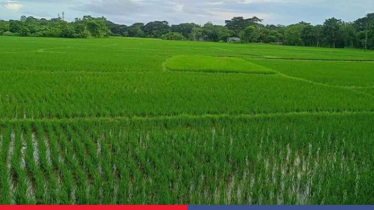
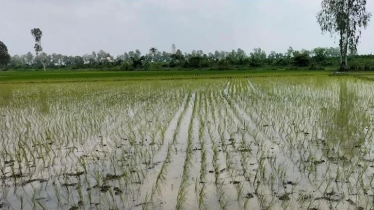
Golden paddy is ripening across the hills of Khagrachhari, yet a promising harvest cannot conceal the steady erosion of Jum cultivation, the age-old hill-farming system whose acreage has fallen by more than half in just five years.
Jum farmers remain busy harvesting, threshing and storing their crops, but the season's favourable yield has been overshadowed by a structural contraction. According to the Department of Agricultural Extension, the area under Jum cultivation in Khagrachhari has dwindled from around 2,500 hectares in 2020–21 to approximately 1,150 hectares this year, a decline of about 54%. Farmers attribute the retreat to shrinking cultivable land, expanding settlements and fruit orchards, escalating production costs, labour shortages and waning interest among younger generations. Moreover, the conversion of previously cultivated hills into residential areas, fruit gardens and commercial projects has significantly curtailed the availability of suitable land.
For those who persevere, economic pressures are becoming increasingly onerous. Farmers say they must now spend more on fertiliser, pesticides and hired labour, whereas returns have not risen proportionately. Although this year's harvest has been favourable in several areas, farmers such as Milon Tripura and Shanti Tripura say that only a handful of families still practise Jum cultivation in some localities. Furthermore, the system yields a diverse range of crops, including maize, sesame, millet, marfa and chilli alongside rice, thereby contributing not only to household income but also to food security.
Read More: Water lilies support 3,000 families in Gopalganj
In response, the Department of Agricultural Extension has sought to boost productivity by supplying improved seeds and fertiliser, while officials are advising farmers on modern crop varieties and cultivation techniques. This year, growers received BRRI dhan-83, BINA dhan-19 and BINA dhan-21 seeds, and officials report encouraging yields amid favourable rainfall. Nevertheless, higher productivity alone may prove inadequate if the area available for cultivation continues to diminish. Consequently, safeguarding Jum-dependent livelihoods will demand a holistic approach that tackles land-use change, labour shortages and agricultural support simultaneously, while preserving the indigenous knowledge accumulated over generations.
newsbangladesh.com/mb