PM urges deeper cooperation across the Bay of Bengal
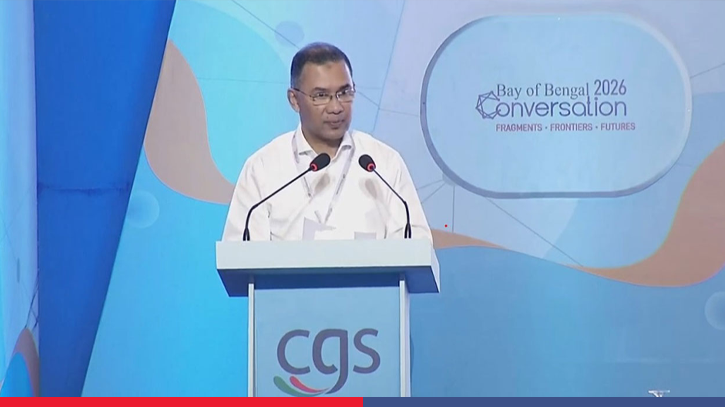
Photo: Collected
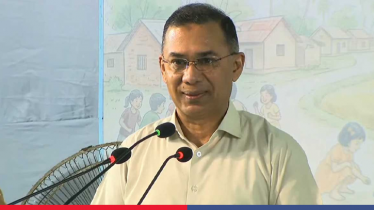
Prime Minister Tarique Rahman has called for stronger bilateral and multilateral cooperation to unlock the formidable economic and strategic potential of the Bay of Bengal, while unveiling an ambitious five-year agenda that pledges to convert political commitments into tangible results.
Addressing the opening of the three-day Bay of Bengal Conversation 2026 at the Pan Pacific Sonargaon Hotel in Dhaka on Saturday, the prime minister argued that cooperation should span trade, energy, technology, climate and maritime affairs. He contended that Bangladesh's strategic location, seaports, waterways and coastal economy could integrate the country more closely with the global economy through shipping, fisheries, tourism, energy and regional supply chains. Furthermore, he outlined his government's priorities, emphasising national interests, policy continuity, economic stability and institutional reform, and indicated that Bangladesh would seek to attract investment and establish itself as a manufacturing and investment hub while expanding employment in production, services and exports.
On the domestic front, the government plans to introduce Family, Farmer and Health Cards and to recruit 100,000 healthcare workers, around 80% of whom would be women. In addition, it intends to broaden access to education, technical training, artificial intelligence and entrepreneurship; meanwhile, it aims to raise agricultural productivity, dig 20,000 kilometres of canals and waterways, advance the Padma Barrage project and formulate a Teesta Master Plan. Environmental objectives include planting 250 million trees over the next five years, alongside measures to expand solar power, recycling and green industries. Moreover, Tarique reiterated Bangladesh's commitment to transparency, accountability, human rights, democratic values, freedom of expression and the equal application of the rule of law.
Read More: Uranium for Rooppur`s second unit arrives under tight guard
Turning to the Rohingya crisis, the prime minister stressed that the government's priority was to facilitate the early, voluntary, safe, dignified and sustainable repatriation of around 1.2 million refugees, a goal that would require sustained international political support and financing. Organised by the Centre for Governance Studies from October 3 to 5 under the theme "Fragments, Frontiers and Futures: Navigating Power, Technology and Trust in a World Rewritten", the conference has convened more than 200 speakers, 300 delegates and over 1,000 participants from more than 100 countries.
newsbangladesh.com/mb